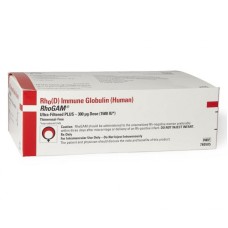

Understanding Rho(D) Immune Globulin: Unifying Principles and Key Features
Rho(D) Immune Globulin is a crucial therapeutic product designed primarily to prevent Rh immunization in Rh-negative individuals. The primary function of Rho(D) Immune Globulin is to prevent the formation of antibodies that can lead to hemolytic disease in newborns, a serious complication that arises when an Rh-negative mother carries an Rh-positive baby. This overview will explore the fundamental principles that unite all products within the Rho(D) Immune Globulin category, highlighting their key features and operational mechanisms.
At its core, Rho(D) Immune Globulin consists of immunoglobulin G (IgG) antibodies derived from human plasma. These antibodies specifically target and neutralize Rh-positive red blood cells that may enter an Rh-negative mother's bloodstream, thereby minimizing the risk of her immune system producing harmful antibodies against these cells. This proactive approach is vital in preventing potential complications during pregnancy and childbirth, ensuring the safety of both mother and child.
Key features of Rho(D) Immune Globulin include its safety profile, ease of administration, and its role as a preventative treatment rather than a curative one. The product is generally administered via intramuscular injection, and its effectiveness is well-documented, making it a cornerstone in obstetric care for at-risk mothers. The universal application of these principles across various Rho(D) Immune Globulin products makes them essential tools in modern medicine.
The Various Forms of Rho(D) Immune Globulin Products
Rho(D) Immune Globulin products typically come in several formulations, with the most common forms being injectable solutions. These products are prepared to specific dosages to meet the needs of different clinical scenarios, such as prevention after childbirth, miscarriage, or certain medical procedures. Different manufacturers may also offer Rho(D) Immune Globulin in concentrations suited for specific treatments or age groups. Most formulations are sterile and preservative-free, ensuring that they are safe for administration in clinical settings.
Additionally, some variants are designed for unique storage conditions or extended stability, providing healthcare providers with flexible options tailored to their practices and patient needs. For example, while some vials are stable at room temperature for limited durations, others may require refrigeration. Understanding these distinctions is critical for professionals administering these products and for patients to ensure optimal efficacy and safety.
Why Choose Rho(D) Immune Globulin Over Other Treatments?
Rho(D) Immune Globulin stands out from other therapeutic options due to its specialized mechanism of action and its targeted use in managing Rh incompatibility. Unlike other immunoglobulins that may serve a broader or different range of conditions, Rho(D) Immune Globulin specifically addresses the risks associated with Rh factor discrepancies during pregnancy. This focused approach ensures that both healthcare providers and patients can rely on its efficacy and safety for preventing serious complications related to blood group incompatibility.
Furthermore, while other treatments may offer nonspecific immunomodulatory effects, Rho(D) Immune Globulin acts directly to neutralize Rh-positive cells, thereby preventing the sensitization of the Rh-negative immune system. This targeted action not only enhances patient safety but also simplifies treatment protocols for obstetricians and healthcare professionals, making Rho(D) Immune Globulin the go-to choice for managing Rh incompatibility—a key differentiator in therapeutic care.
Considering Long-term Effects and Contraindications of Rho(D) Immune Globulin
The long-term effects of using Rho(D) Immune Globulin are generally favorable, with most patients experiencing a beneficial outcome with proper administration. However, certain contraindications should be carefully considered before use. For instance, Rho(D) Immune Globulin is not recommended for individuals who have experienced a severe allergic reaction to the product in the past. Additionally, its use is not appropriate for patients with active hemolytic disease of the newborn, as the intended preventative action would not address existing issues.
Also, while most adults can safely receive Rho(D) Immune Globulin, caution should be taken for infants, immunocompromised individuals, and those with certain pre-existing health conditions. Pregnant women in specific situations, especially with complicating factors, should consult their healthcare provider for tailored advice. Understanding these contraindications is essential for maximizing the benefits of Rho(D) Immune Globulin therapy while minimizing potential risks.
Practical Guidelines for Choosing and Using Rho(D) Immune Globulin
When considering Rho(D) Immune Globulin, it is essential to consult with healthcare professionals to determine the most appropriate product and dosage based on individual medical history and current health status. Patients should be proactive in discussing any previous allergic reactions or pre-existing conditions that might affect treatment. Additionally, storing Rho(D) Immune Globulin products as per manufacturer guidelines ensures optimal efficacy—whether it's keeping them at the right temperature or using them within their specified shelf life.
Moreover, timing plays a critical role; Rho(D) Immune Globulin is best administered within 72 hours following delivery or any potential Rh-positive blood exposure during pregnancy to ensure maximum effectiveness. Health providers can guide patients on the specific conditions that warrant the use of Rho(D) Immune Globulin, such as after a miscarriage, abortion, or trauma, which can lead to Rh sensitization.
In conclusion, Rho(D) Immune Globulin is a vital therapeutic option with unique properties that set it apart. By understanding the various forms, differences, long-term effects, contraindications, and practical guidance for use, patients and healthcare providers can make informed decisions that prioritize health and safety.